
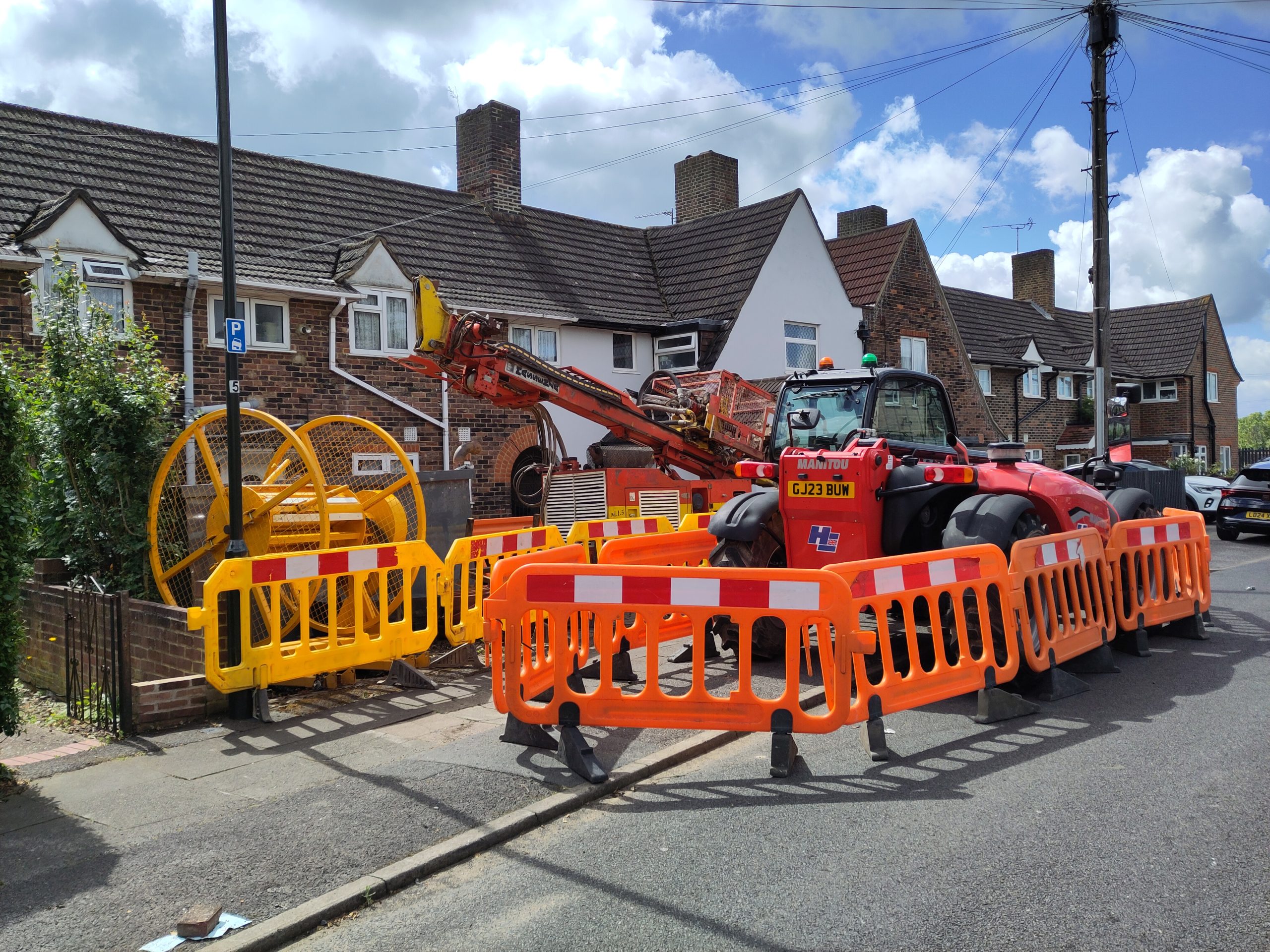
Annie and Will contacted me at Ecoalex because they wanted to make their house in Wimbledon, South East London warmer and more energy efficient. They have a realistic budget for the project but want to make the most of it and prioritise the projects that save the most carbon and fit with the renovation plans they have for their house.

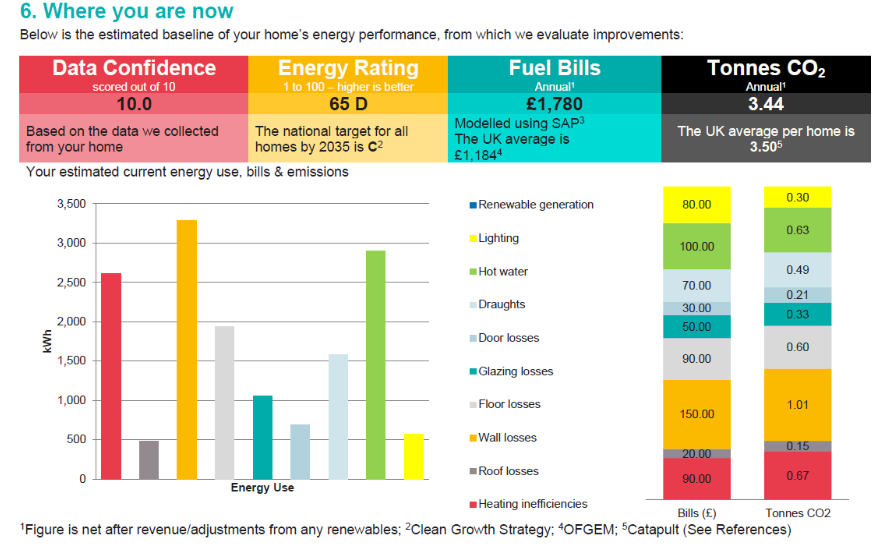
We started with a PAS 2035 retrofit assessment, carried out by Paul at Ecoalex which modelled the current state of the house, giving it an estimated EPC rating of 65D, the software estimates energy bills of around £1,780 and about 3.44 tonnes of CO2 usage per annum. Most of the house was reasonably well insulated as the cavity walls had already been filled and the roof space had 200mm of insulation.
Using specialist software from Parity Projects, we produced a comprehensive whole house retrofit plan which identified the effects of different improvements on household bills and carbon usage and were able to prepare a three stage plan.
Stages 1 and 2 suggested the following improvements:-
- Insulating the floor above the alleyway at the side of the house
- Increasing the loft insulation
- Adding a humidity controlled ventilation system
- Installing solar PV
- Installing ground source heat pump
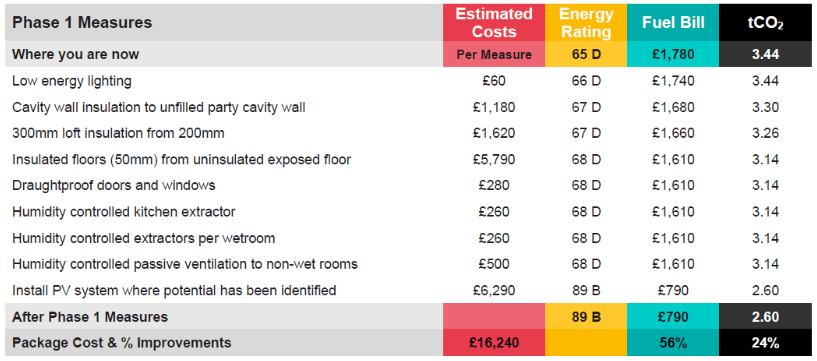
These improvements with a few others that you can see in this section of the plan would increase the EPC rating of the house to 97A, would reduce energy bills to £520 per annum and, very importantly for Annie and Will, reduce the carbon emissions to zero.

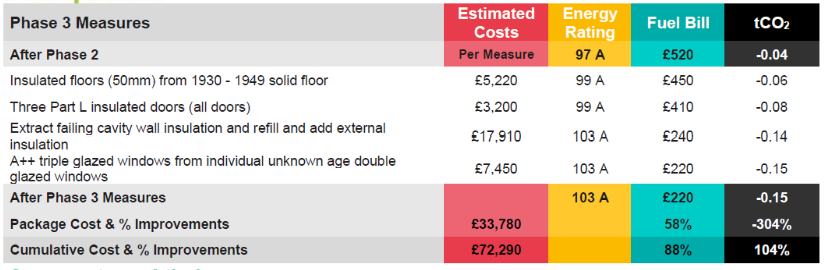
Stage 3 included some longer term goals such as insulating the floors and replacing doors and windows, which could be carried out either when they need replacing or when other building work is in progress. These improvements could eventually make the house carbon negative.
Annie and Will’s first decision was to install a ground source heat pump. These work by extracting heat from the ground in winter and transferring it to the home and is extremely efficient, even more so than an air source heat pump, but does require quite a lot of excavation.
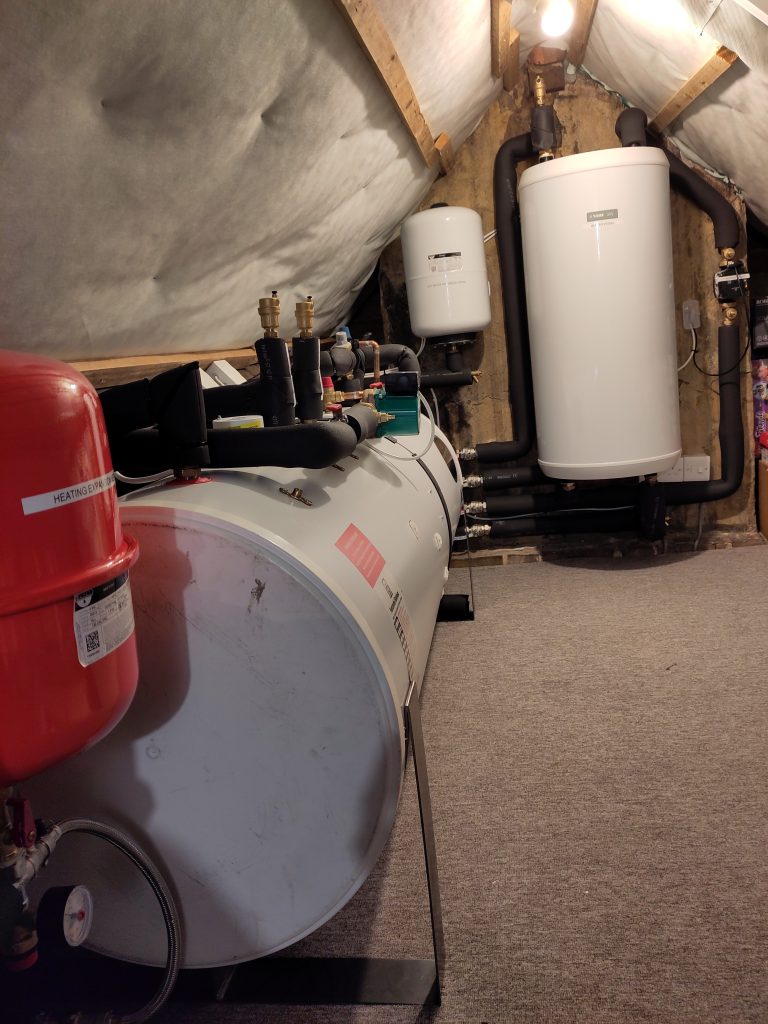
Annie and Will were able to find space in their loft for a lot of the equipment needed and only required a small external unit to go with it.
The ground source pipes were put into bore holes in the front garden which was paved and easy to dig up. Removal of the paving has meant more planting and an increase in the area’s biodiversity.
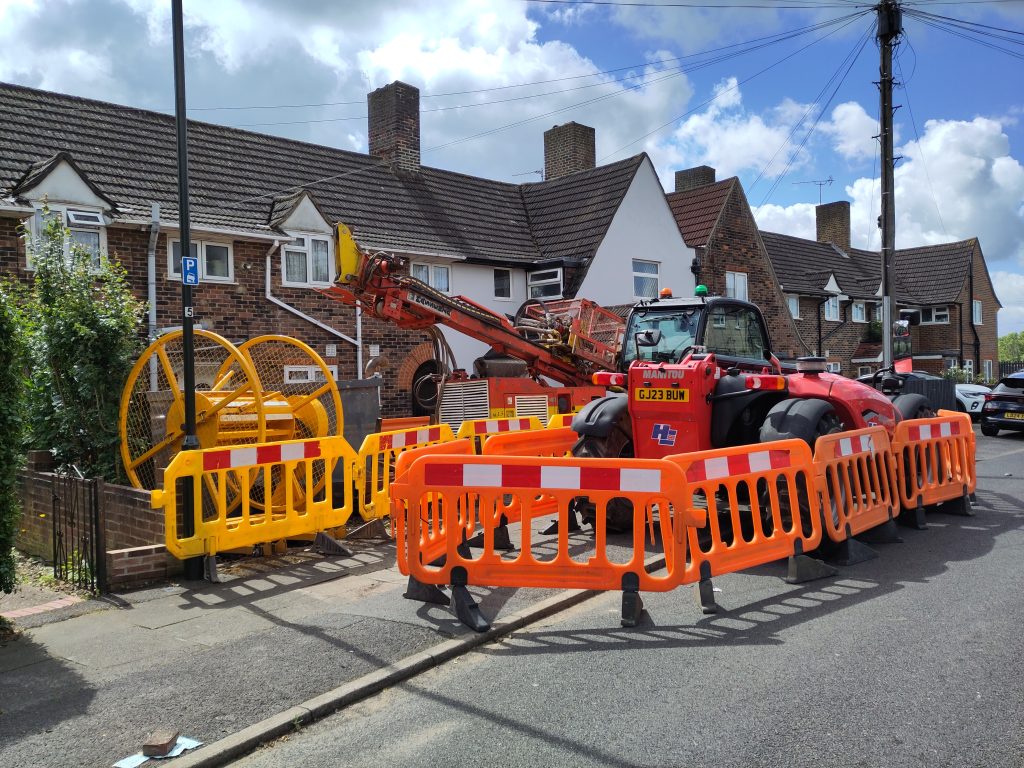
The pump has been in for several weeks now and is warming the house most efficiently.


Annie and Will’s next task is to insulate the floors above the alleyway as these are still rather cold. They will then work through the longer term goals in the latter stages of the plan and will be achieved over the next ten to twenty years. Some of these goals will be achieved as part of refurbishment works and a planned extension.
They are delighted with the work so far and that the plan will give them an idea of what to do with their house for years to come setting them on the course to a net zero home.